Category: Blog

Your blog category

  • RO vs UV vs UF Water Purifier – Best Choice for Home

    If your home has high TDS water (above 300 ppm), an RO (Reverse Osmosis) purifier is usually the best option because it removes dissolved salts, heavy metals, and harmful chemicals.

    If your water has low TDS but may contain bacteria or viruses, a UV (Ultraviolet) purifier works well by killing microorganisms without changing the mineral content of the water.

    If you want a non-electric water purification system for low-TDS water, UF (Ultrafiltration) purifiers are suitable because they remove bacteria and suspended particles without requiring electricity.

    However, most modern Indian households prefer RO + UV + UF combo water purifiers because they provide multi-stage purification, removing TDS, bacteria, viruses, and physical impurities together. These systems are especially useful when the water source is uncertain or varies between borewell, tanker, or municipal supply.

    By the end of this article, you’ll clearly know which water purifier is best for your home and how to choose one that ensures safe, healthy drinking water for your family.

    What Is RO, UV & UF Water Purification?

    When choosing a water purifier for your home, you will often see three main purification technologies: RO (Reverse Osmosis), UV (Ultraviolet), and UF (Ultrafiltration). Each technology works differently and is designed to remove specific types of impurities from water.

    Understanding how these purification systems work will help you select the best water purifier based on your water source, contamination level, and TDS level.

    Below is a simple explanation of RO vs UV vs UF purification technologies.

    What is RO (Reverse Osmosis)?

    Reverse Osmosis (RO) is one of the most advanced water purification technologies used in modern water purifiers. It works using a semi-permeable membrane that filters out dissolved impurities from water.

    In an RO system, water is pushed through a very fine membrane under pressure. The membrane allows only clean water molecules to pass through while blocking contaminants and dissolved solids.

    How RO Filtration Works

    RO purification works through membrane filtration where microscopic pores block contaminants smaller than 0.0001 microns.

    This process removes harmful dissolved substances that cannot be filtered by traditional filtration systems.

    What RO Purifiers Remove

    RO technology is effective at removing:

    • Dissolved salts
    • Heavy metals
    • Chemical contaminants
    • High Total Dissolved Solids (TDS)

    Common contaminants removed by RO include:

    • Lead
    • Arsenic
    • Fluoride
    • Nitrates
    • Excess minerals causing hard water

    Because of this capability, RO purification is considered the best solution for high-TDS water sources.

    Best Water Sources for RO Purifiers

    RO water purifiers are ideal for homes using:

    • Borewell water
    • Groundwater
    • Hard water with high TDS levels

    If your water has TDS above 300–500 ppm, an RO purifier is usually recommended.

    What is UV (Ultraviolet Purification)?

    UV water purification uses ultraviolet light to disinfect water by killing harmful microorganisms.

    Inside a UV purifier, water flows through a chamber where it is exposed to UV-C light. This light damages the DNA of microorganisms, preventing them from reproducing and causing infections.

    Unlike RO filtration, UV purification does not remove dissolved solids. Instead, it focuses on eliminating biological contamination.

    What UV Purification Removes

    UV purification is highly effective at destroying:

    • Bacteria
    • Viruses
    • Parasites
    • Microorganisms that cause waterborne diseases

    This makes UV purification particularly useful for biologically contaminated water.

    Limitations of UV Purifiers

    Although UV is powerful for disinfection, it has some limitations.

    UV purification:

    • Does NOT remove TDS
    • Does NOT remove heavy metals
    • Does NOT remove dissolved chemicals

    Therefore, UV purifiers work best when the water already has low TDS levels but may contain microbes.

    Best Water Sources for UV Purifiers

    UV water purifiers are most suitable for:

    • Municipal water supply
    • Tap water with low TDS
    • Pre-treated water sources

    What is UF (Ultrafiltration)?

    Ultrafiltration (UF) is a membrane-based filtration technology that removes impurities using a hollow fiber membrane.

    The UF membrane contains microscopic pores that physically block particles and microorganisms while allowing clean water to pass through.

    Unlike RO systems, UF filtration works without electricity because it relies on natural water pressure.

    What UF Purifiers Remove

    UF filtration is effective at removing:

    • Suspended particles
    • Sediments
    • Bacteria
    • Turbidity-causing impurities

    Because of this, UF purification is often used in gravity-based water purifiers.

    Advantages of UF Purifiers

    UF water purification has several benefits:

    • Works without electricity
    • Low maintenance cost
    • Minimal water wastage
    • Suitable for areas with frequent power cuts

    These advantages make UF purifiers popular in rural areas and regions with stable low-TDS water sources.

    Limitations of UF Purification

    Despite its advantages, UF filtration has some limitations.

    UF purifiers:

    • Cannot remove dissolved salts
    • Cannot reduce TDS levels
    • Cannot remove heavy metals

    Because of this, UF technology is not suitable for hard water or borewell water with high TDS.

    RO vs UV vs UF – Water Purifier Comparison
    FeatureRO PurifierUV PurifierUF Purifier
    Removes TDS✅ Yes❌ No❌ No
    Kills Bacteria & Viruses⚠ Partial✅ Yes⚠ Bacteria Only
    Electricity RequiredYesYesNo
    Water WastageModerateNoneNone
    Maintenance CostHighMediumLow
    Best ForBorewell / Hard WaterMunicipal WaterLow TDS Water
    Average Price₹9,000 – ₹20,000₹6,000 – ₹12,000₹3,000 – ₹8,000

    In simple terms, RO purifiers are best for homes with high TDS or borewell water, while UV purifiers are suitable for municipal water where microbial contamination is the main concern. If your water already has low TDS and you want a purifier that works without electricity, UF purifiers can be a practical and budget-friendly choice.

    How to Choose Based on Your Water Source
    This is the most important question — and most people skip it. Your purifier choice should be driven by your TDS level and water source, not brand marketing.

    Step 1: Test Your TDS Level First

    You can buy a TDS meter for under ₹300 online and test your tap water yourself. Here’s what the readings mean:

    TDS Level (ppm)Water QualityRecommended Purifier
    Below 200ExcellentUF or UV
    200–500GoodUV or RO+UV
    500–900PoorRO mandatory
    Above 900Very PoorRO+UV+UF combo

    ​

    Step 2: Identify Your Water Source

    • Municipal Corporation Supply → Low TDS, bacteriological risk → UV or UV+UF
    • Borewell / Groundwater → High TDS, chemical and heavy metal risk → RO
    • Tanker Water → Mixed contamination, unpredictable TDS → RO+UV+UF combo
    • Rural / Hill Areas → Low TDS, low power reliability → UF

    Pros and Cons at a Glance

    ✅ RO Purifier — Pros & Cons

    Pros

    • Removes 90–95% of dissolved salts, heavy metals, and chemicals
    • Kills bacteria, viruses, and cysts
    • Best for high TDS borewell or tanker water
    • Provides the most comprehensive purification protection

    Cons

    • Wastes 3–4 litres of water per litre purified
    • Removes beneficial minerals (TDS controllers can rebalance them)
    • Requires electricity to operate
    • Higher maintenance cost — RO membrane replacement every 12–18 months

    ✅ UV Purifier — Pros & Cons

    Pros

    • Kills 99.99% of bacteria and viruses
    • Does not change the taste or mineral content of water
    • No water wastage
    • Fast purification process

    Cons

    • Cannot remove dissolved salts, heavy metals, or chemicals
    • Dead microorganisms remain in water (though harmless)
    • Requires electricity
    • Not effective for muddy or turbid water without a pre-filter

    ✅ UF Purifier — Pros & Cons

    Pros

    • Works without electricity — ideal for power-cut areas
    • Removes bacteria, cysts, and suspended particles
    • Retains essential minerals
    • Low maintenance cost

    Cons

    • Cannot remove dissolved salts, heavy metals, or chemicals
    • Not suitable for high TDS water
    • Lower purification capacity compared to RO or UV systems

    RO + UV + UF Combo Purifiers (Why They Dominate India)

    In India, water quality varies significantly depending on the source. Borewell water may contain high TDS and heavy metals, while municipal water can contain bacteria and viruses. This is why most modern water purifiers use a RO + UV + UF multi-stage purification system. Combining these technologies ensures that dissolved impurities, microorganisms, and sediments are removed effectively.

    Multi-stage purification provides a comprehensive approach to water safety. Each stage removes a specific type of impurity, resulting in cleaner, safer, and better-tasting drinking water for your home.

    Typical Stages in a RO + UV + UF Water Purifier

    1. Sediment Filter – Removes visible particles such as sand, dust, and rust.
    2. Activated Carbon Filter – Eliminates chlorine, bad odor, and harmful organic chemicals.
    3. RO Membrane – Removes dissolved salts, heavy metals, and high TDS from water.
    4. UV Chamber – Uses ultraviolet light to kill bacteria, viruses, and microorganisms.
    5. UF Membrane – Provides an additional filtration layer to block remaining bacteria and particles.
    6. Mineralizer – Adds essential minerals back to purified water to improve taste and health benefits.

    Key Benefits of RO + UV + UF Purifiers

    • Removes high TDS and dissolved impurities.
    • Kills bacteria, viruses, and harmful microorganisms.
    • Improves taste and odor of drinking water.
    • Provides multi-layer protection against different types of contamination.
    • Suitable for borewell, tanker, and mixed water sources.

    What is a TDS Controller?

    A TDS controller is an important component in modern RO purifiers. During the RO filtration process, dissolved salts and minerals are removed from water. A TDS controller regulates the mineral balance by mixing a small amount of raw water with purified water. This helps maintain essential minerals while keeping the water safe for drinking.

    What is a Mineralizer?

    A mineralizer cartridge restores beneficial minerals that may be removed during the RO purification process. These minerals not only improve the taste of water but also support overall health.

    • Calcium – Supports bone strength and muscle function.
    • Magnesium – Helps regulate nerve and muscle activity.

    Together, the TDS controller and mineralizer ensure that RO-purified water remains both safe and healthy for daily consumption.

    Looking for the best multi-stage water purifier?
    Shop RO + UV + UF Purifiers at Homvel →

    5-Year Maintenance Cost Comparison: RO vs UV vs UF

    When buying a water purifier, many people focus only on the purchase price. However, the real cost includes filter replacements, membrane or UV lamp changes, and annual maintenance. The table below compares the estimated 5-year maintenance cost of RO, UV, and UF water purifiers.

    Cost TypeRO PurifierUV PurifierUF Purifier
    Filter Replacement₹2000 – ₹4000₹1500₹800
    Membrane / UV Lamp₹3000₹1200—
    AMC (Yearly)₹3000₹2000₹800
    5-Year Total Cost₹12,000 – ₹18,000₹7,000 – ₹10,000₹3,000 – ₹5,000
    Pro Tip: Always check replacement filter and spare part availability before buying a budget water purifier. Cheap purifiers may have low upfront costs but expensive or hard-to-find replacement parts later.

    FAQ’s

    Yes. RO water is safe when the purifier includes a TDS controller or mineralizer that retains essential minerals like calcium and magnesium.
    No. UV purifiers only kill bacteria and viruses using ultraviolet light. They cannot remove dissolved salts or heavy metals.
    UF (Ultrafiltration) water purifiers work without electricity and are suitable for areas with low TDS water supply.
    According to BIS standards in India, drinking water with TDS between 50 ppm and 300 ppm is considered safe and healthy.
    RO is best for high TDS water, UV works well for municipal water with microbes, and UF is ideal for low-TDS water and areas with power cuts.
    Yes. Traditional RO purifiers waste 2–3 liters of water for every liter purified, but newer models include water-saving technologies.
    Most RO filters should be replaced every 6–12 months depending on water quality and usage.
    A TDS controller regulates the mineral content in purified water to ensure the taste and essential minerals remain balanced.
    Boiling water kills bacteria but does not remove dissolved salts or heavy metals. RO filtration removes both contaminants and dissolved solids.
    RO purifiers are recommended for borewell water because they effectively remove high TDS, heavy metals, and dissolved impurities.

  • Best RO Water Purifier Under 20000 in India 2026

    Access to clean and safe drinking water has become one of the most important health concerns for Indian households in 2026. Rapid urbanization, aging pipelines, and groundwater depletion have significantly affected water quality across many cities.

    As a result, millions of families are now investing in advanced water purification systems to ensure safe daily drinking water.

    In many parts of India, especially metro cities and groundwater-dependent areas, Total Dissolved Solids (TDS) levels often exceed safe limits. Contaminants such as fluoride, lead, arsenic, chlorine, and harmful bacteria can enter the water supply through old infrastructure or untreated groundwater sources.

    Drinking untreated water with high TDS for long periods can affect digestion, kidney health, and overall well-being.

    This is why choosing the right RO water purifier has become essential for modern Indian homes. However, with dozens of brands and models available in the market, finding the best purifier within a reasonable budget can be confusing.

    To make your decision easier, we researched and compared the best RO water purifiers under 20000 in India (2026) based on purification technology, storage capacity, smart features, maintenance cost, and real user value.

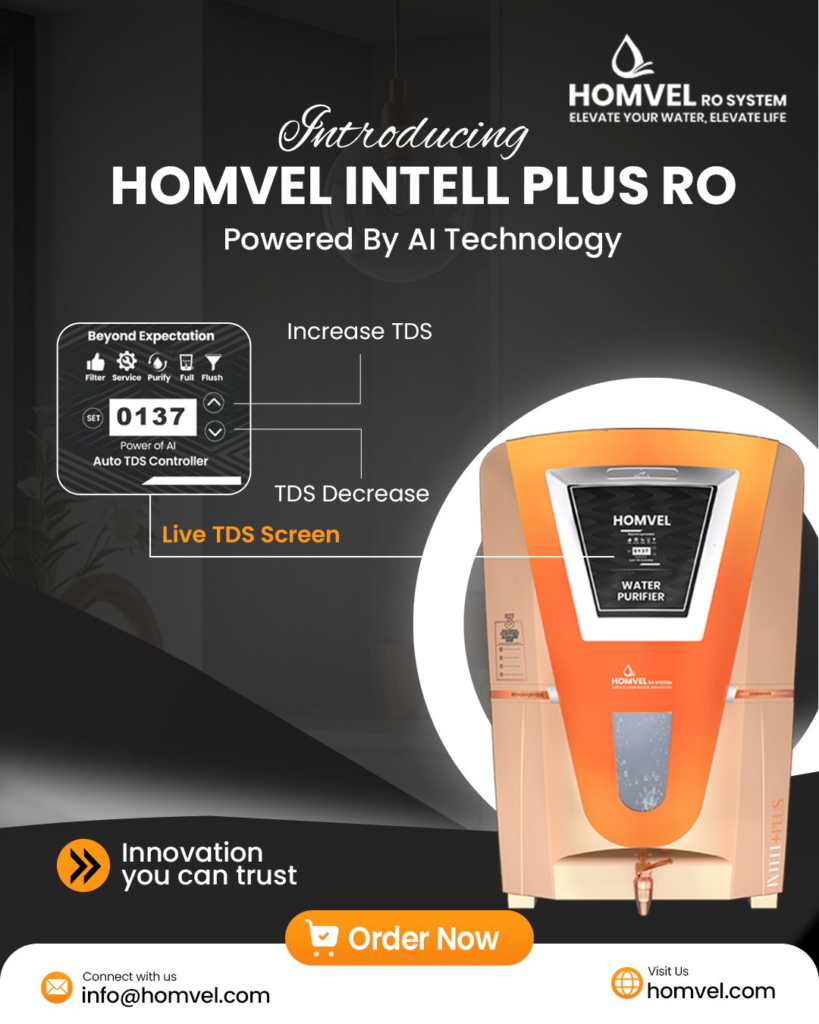
    Our Top Pick: Homvel Intell Plus RO

    Before we compare all the water purifiers on this list, it’s important to highlight why the Homvel Intell Plus RO stands out as the best RO water purifier under 20000 in India (2026).

    Many purifiers in this price range offer basic RO filtration, but Homvel combines smart monitoring, multi-stage purification, and intelligent water sensing, making it more suitable for the varying water conditions found across Indian cities.

    Whether your home receives borewell water, municipal supply, or tanker water, the Homvel Intell Plus RO is designed to automatically adapt and maintain safe drinking water quality.

    Homvel Intell Plus RO – Key Features

    FeatureHomvel Intell Plus RO
    TechnologyRO + UV + UF + Digital TDS Controller
    TDS MonitoringReal-time Digital Display
    Purification StagesMulti-stage Advanced Filtration
    DesignModern, Wall-Mountable
    Best ForBorewell + Municipal Water
    PriceUnder ₹20,000
    Buy From Visit Homvel.in

    🏆 Why Homvel Intell Plus RO is #1

    🔢
    Digital TDS Controller

    Unlike many purifiers in this price range, Homvel includes a real-time digital TDS display that allows users to monitor water quality instantly. This ensures you always know the purity level of your drinking water.

    💧
    24×7 Intelligent Water Purification

    The purifier uses smart sensing technology that automatically adjusts filtration depending on incoming water quality, ensuring consistent purification performance.

    🇮🇳
    Built for Indian Water Conditions

    Indian households often deal with high-TDS borewell water and inconsistent municipal supply. Homvel Intell Plus RO is specifically engineered to handle these conditions effectively.

    🛠️
    Pan-India Service Support

    Homvel offers nationwide service coverage, ensuring quick installation, maintenance, and filter replacement support.

    💰
    Transparent AMC Pricing

    Unlike some brands that charge hidden service fees, Homvel provides clear and transparent AMC plans, helping households manage maintenance costs easily.

    What is RO Water Purification?

    Reverse Osmosis (RO) is an advanced water purification technology that removes harmful contaminants, dissolved salts, and heavy metals from drinking water using a semi-permeable membrane. In this process, water is forced through a specialized membrane that blocks impurities while allowing only clean water molecules to pass through.

    RO technology is widely used in modern home water purifiers because it can significantly improve water quality, especially in regions with high levels of dissolved solids in groundwater.

    Studies on Reverse Osmosis show that a properly functioning RO system can remove up to 95–99% of impurities, including:

    • Lead
    • Arsenic
    • Fluoride
    • Chlorine
    • Dissolved salts
    • Bacteria and viruses

    Because of this high filtration efficiency, RO purifiers are especially recommended for areas where drinking water contains high TDS (Total Dissolved Solids) or chemical contaminants.

    When Do You Need an RO Water Purifier?

    The need for RO purification largely depends on the TDS level of your water supply. TDS measures the concentration of dissolved minerals, salts, and metals present in water.

    TDS LevelWater QualityRecommended Purifier
    Below 150 ppmSoft waterUV / UF
    150–300 ppmModerateRO + UV
    300–2000 ppmHard waterRO + UV + UF

    In many Indian cities, especially those dependent on borewell or tanker water, TDS levels often exceed 300 ppm. Such water may contain excess minerals, heavy metals, and other contaminants that affect taste and safety.

    This is why RO purification has become essential for many Indian households, ensuring clean, safe, and healthy drinking water every day.

    Key Features to Check Before Buying an RO Water Purifier

    Don’t just buy by brand name. Here’s what actually matters when choosing a water purifier in 2026:

    • 🔢
      Digital TDS Display Real-time water quality monitoring. This premium feature helps you track TDS levels instantly and is standard on the Homvel Intell Plus RO.
    • ⚙️
      Purification Stages A purifier with 7–10 purification stages ensures complete removal of contaminants, heavy metals, and microorganisms.
    • 🚰
      Storage Capacity An 8–10 litre storage tank is ideal for a typical Indian family of four.
    • 💧
      TDS Controller / Mineraliser This feature restores essential minerals after RO purification, improving taste and maintaining balanced drinking water.
    • 🦠
      UV LED in Tank Prevents bacteria re-growth inside the storage tank and keeps stored water hygienic.
    • 🛠️
      AMC Cost Check the annual maintenance cost including filter replacements and service charges over 3–5 years.
    • ♻️
      Water Wastage Ratio Standard RO systems waste around 3 litres for every 1 litre purified, but modern eco-models reduce this ratio.
    • 🛡️
      Warranty Choose purifiers with at least a 1-year warranty, though 2-year coverage is preferred.

    Best RO Purifiers Under ₹20,000 — Full Comparison

    RankModelTechnologyCapacityPriceBest For
    🥇 #1Homvel Intell Plus RORO + UV + UF + Digital TDS8–10LUnder ₹20,000Best Overall — Indian Water
    🥈 #2KENT Grand PlusRO + UV + UF + TDS9L₹14,500–₹16,500High-TDS Borewell Water
    🥉 #3AO Smith Z5 PlusRO + UV + Alkaline5L₹15,500–₹16,500Alkaline Water Preference
    #4KENT SapphireRO + UV + UF + Alkaline + UV LED8L₹17,500–₹18,500UV LED Tank Protection
    #5Aquaguard Ritz ProRO + UV + Titanium Duo6.2L₹15,000–₹16,500Legacy Brand Trust
    #6Pureit Revito PrimeRO + UV + MF + Minerals8L₹15,000–₹18,000Low Water Wastage
    #7Atomberg IntellonRO + UV + UF + Minerals8L₹17,000–₹19,500App-based TDS Control

    1. Homvel Intell Plus RO — Best RO Water Purifier Under ₹20,000 in India 2026

    If you’ve been searching for the best RO water purifier under ₹20,000 in India, your search ends here.

    Homvel Intell Plus RO Water Purifier India 2026

    Homvel Intell Plus RO — Best RO Water Purifier Under ₹20,000 in India 2026

    The Homvel Intell Plus RO is one of the most intelligently designed water purifiers available under ₹20,000 in India. Built specifically for Indian water conditions, it combines advanced RO + UV + UF multi-stage purification with a smart Digital TDS Controller that allows real-time monitoring of your drinking water quality.

    • ✅ Digital TDS Controller — real-time water purity monitoring
    • ✅ Advanced RO + UV + UF multi-stage filtration
    • ✅ Handles borewell and municipal water supplies
    • ✅ 24×7 intelligent purification with auto-sensing technology
    • ✅ Sleek wall-mountable design for modern kitchens
    • ✅ Transparent AMC pricing with no hidden charges
    • ✅ Dedicated pan-India service support
    Buy Homvel Intell Plus RO — Best Price

    Full Specifications

    SpecificationDetails
    Purification TechnologyRO + UV + UF
    TDS ControllerDigital — Real-time Display
    Purification StagesMulti-stage Advanced Filtration
    Water Source CompatibilityBorewell, Municipal, Tanker
    DesignWall-Mountable, Modern Finish
    Intelligent Sensing24×7 Auto-Sensing Technology
    AMC PlanTransparent — No Hidden Charges
    Service NetworkPan-India
    PriceUnder ₹20,000
    WarrantyManufacturer Warranty Included
    Where to Buy🔗 homvel.com

    2. KENT Grand Plus — Best Budget Alternative Under ₹19,400

    If the Homvel Intell Plus RO is unavailable in your area or you’re specifically looking for a tried-and-tested brand with a massive pan-India service network, the KENT Grand Plus is the strongest runner-up in the under-₹19,400 segment in 2026.

    KENT Grand Plus RO Water Purifier

    KENT Grand Plus — Best Budget Alternative Under ₹19,400

    The KENT Grand Plus is one of the most trusted water purifiers in India and a strong runner-up in the under ₹20,000 category. Designed to handle high-TDS borewell water, it uses reliable RO + UV + UF purification to remove dissolved salts, bacteria, viruses, and harmful contaminants from drinking water.

    For families looking for a well-established brand with a wide service network across India, the KENT Grand Plus remains a dependable choice in 2026.

    • RO + UV + UF multi-stage purification technology
    • Handles high-TDS borewell water up to 2000 ppm
    • Large storage tank suitable for families
    • Auto start/stop tank filling system
    • Wall-mountable design for Indian kitchens
    • KENT’s nationwide service network
    Buy Now — Best Price

    Full Specifications

    SpecificationDetails
    Purification TechnologyRO + UV + UF
    TDS ControllerAnalogue — Manual Setting
    Storage Capacity9 Litres
    Filtration Speed20 Litres/Hour
    Max Input TDSUp to 2000 ppm
    Power Consumption60 Watts
    Operating Pressure5–15 psi
    DesignWall-Mountable
    Dimensions36cm × 26cm × 47cm
    Weight~9 kg
    Warranty1 Year (Extended plans available)
    Approx. Price₹14,500 – ₹16,500
    Best ForFamilies with high-TDS borewell water

    3. AO Smith Z5 Plus — Best for Alkaline Water Under ₹15,999

    When AO Smith entered the Indian water purifier market, the company brought decades of global expertise in water technology and a strong reputation built in the United States. Among its most popular models in the affordable segment is the AO Smith Z5 Plus, a purifier that gained attention primarily for one standout feature — alkaline water technology.

    AO Smith Z5 Plus RO Water Purifier

    AO Smith Z5 Plus — Best for Alkaline Water Under ₹15,999

    The AO Smith Z5 Plus is one of the most popular water purifiers for buyers looking specifically for alkaline drinking water in the under ₹15,999 price segment. Known for its global reputation and modern purification technology, AO Smith combines RO + UV purification with an alkaline booster to deliver clean, mineral-rich drinking water.

    For health-conscious households that prefer slightly alkaline water for better hydration and digestion, the Z5 Plus offers a balanced combination of purification performance, compact design, and brand reliability.

    • RO + UV purification with alkaline booster technology
    • Produces alkaline drinking water with pH level above 8
    • Multi-stage purification removes bacteria, viruses, and dissolved salts
    • Slim wall-mountable design ideal for compact kitchens
    • Energy-efficient operation with low power consumption
    • Auto start/stop tank filling system
    • Trusted global brand with strong technology expertise
    Check Price / Buy Now

    Key Specifications

    SpecificationDetails
    Purification TechnologyRO + UV + Alkaline Booster
    Purification Stages8 Stages
    TDS ControllerManual Adjustment
    Storage Capacity5 Litres
    Filtration Speed15 Litres / Hour
    Output Water pHAlkaline (pH 8+)
    Max Input TDSUp to 2000 ppm
    Power Consumption36 Watts
    DesignSlim Wall-Mountable
    Auto Start / StopYes
    Warranty1 Year
    Approx. Price₹15,500 – ₹17,000
    Best ForAlkaline water seekers, compact kitchens

    4. KENT Sapphire – Most Feature-Rich KENT Model Under ₹20,000

    If you have been comparing RO water purifiers under ₹20,000, the KENT Sapphire is a model that often stands out. Among all KENT purifiers in this price range, the Sapphire is arguably the most feature-packed option, combining RO + UV + UF purification with an alkaline booster and UV LED in-tank sterilisation.

    KENT Sapphire RO Water Purifier

    KENT Sapphire — Most Feature-Rich KENT Model Under ₹20,000

    The KENT Sapphire is one of the most advanced water purifiers offered by KENT in the under ₹20,000 category. Designed for Indian households dealing with high TDS water, it combines RO + UV + UF purification with modern features like an alkaline booster and UV LED tank sterilisation.

    For buyers who want multiple purification technologies in a single system, the Sapphire delivers strong performance along with a premium design. The built-in UV LED continuously helps maintain the hygiene of stored water, while the alkaline booster improves the taste and mineral balance of purified water.

    • RO + UV + UF triple purification for safe drinking water
    • UV LED in-tank sterilisation for continuous water hygiene
    • Alkaline booster that enhances taste and mineral balance
    • Handles high-TDS borewell and municipal water supplies
    • Fast purification suitable for family consumption
    • Modern wall-mountable design with premium finish
    • Trusted KENT service network across India
    Check Price / Buy Now

    Key Specifications

    SpecificationDetails
    Purification TechnologyRO + UV + UF + Alkaline + UV LED
    TDS ControllerAnalogue (Manual Setting)
    Storage Capacity8 Litres
    Filtration Speed20 Litres / Hour
    UV LED in TankYes
    Alkaline BoosterYes
    Max Input TDSUp to 2000 ppm
    Power Consumption60 Watts
    Mineral RetentionYes
    DesignWall-Mountable
    Warranty1 Year
    Approx. Price₹17,500 – ₹18,500
    Best ForBuyers wanting alkaline + UV LED combo

    5. Aquaguard Ritz Pro — Best Legacy Brand Option Under ₹16,499

    When most Indians hear the term water purifier, one of the first brands that comes to mind is Aquaguard. This strong brand recall didn’t happen overnight. The company behind Aquaguard, Eureka Forbes, has been serving Indian households since 1984, building more than four decades of trust in water purification technology.

    Aquaguard Ritz Pro Water Purifier

    4. Aquaguard Ritz Pro — Best Legacy Brand Option Under ₹16,499

    The Aquaguard Ritz Pro is a popular water purifier from Eureka Forbes, one of India’s most trusted water purification brands for over four decades. Designed for modern Indian households, it combines RO + UV purification with Aquaguard’s Titanium Duo Filter technology to deliver reliable and safe drinking water.

    For families that trust the Aquaguard legacy and want a purifier backed by a strong nationwide service network, the Ritz Pro remains a dependable choice in the under ₹20,000 category.

    • RO + UV purification with Titanium Duo Filter technology
    • Designed to handle high-TDS borewell and municipal water
    • Advanced filtration removes bacteria, viruses, and heavy metals
    • Premium wall-mountable design for modern kitchens
    • Energy-efficient operation with low power consumption
    • Auto start/stop tank filling technology
    • Eureka Forbes’ trusted pan-India service network
    Check Price / Buy Now

    Key Specifications

    SpecificationDetails
    Purification TechnologyRO + UV + Titanium Duo Filter
    TDS ControllerManual (Analogue)
    Storage Capacity6.2 Litres
    Filtration Speed15 Litres / Hour
    Maximum Input TDSUp to 2000 ppm
    Power Consumption36 Watts
    Titanium Filter LifeUp to 6,000 Litres
    DesignWall-Mountable, Premium Finish
    UV SterilisationYes
    Auto Start / StopYes
    Warranty1 Year
    Approx. Price₹15,000 – ₹16,999
    BrandEureka Forbes (Aquaguard)
    Best ForMedium families and Aquaguard loyalists

    6. Pureit Revito Prime – Best for Low Water Wastage

    When Hindustan Unilever (HUL) entered the Indian water purifier market with the Pureit brand, it brought along decades of experience in consumer products, large-scale manufacturing, and nationwide distribution. Over the years, Pureit has built a reputation for producing reliable and practical water purification solutions for Indian households.

    Pureit Revito Prime Water Purifier

    5. Pureit Revito Prime — Best for Low Water Wastage

    The Pureit Revito Prime from Hindustan Unilever is designed for households that want powerful water purification while minimizing water wastage. With its advanced RO + UV + Microfiltration purification system, the purifier effectively removes harmful contaminants while ensuring that less water is wasted during the purification process.

    For families living in water-scarce cities or those who prioritize eco-friendly appliances, the Revito Prime offers a balanced combination of reliable purification, mineral enrichment, and efficient water usage.

    • RO + UV + Microfiltration purification with mineral enrichment
    • Designed to reduce water wastage compared to traditional RO purifiers
    • Restores essential minerals like calcium and magnesium
    • Suitable for both borewell and municipal water supplies
    • Energy-efficient operation with low power consumption
    • Auto start/stop tank filling system
    • Backed by Hindustan Unilever’s trusted service network
    Check Price / Buy Now

    Key Specifications

    SpecificationDetails
    Purification TechnologyRO + UV + MF + Mineral Cartridge
    TDS ControllerManual (Analogue)
    Storage Capacity8 Litres
    Filtration Speed15 Litres / Hour
    Maximum Input TDSUp to 2000 ppm
    Mineral CartridgeYes
    Water Wastage RatioLower than typical RO purifiers
    Power Consumption36 Watts
    DesignSlim Wall-Mountable
    Auto Start / StopYes
    Warranty1 Year
    Approx. Price₹15,000 – ₹18,000
    Best ForEco-conscious households and water-scarce regions

    7. Atomberg Intellon — Best App-Controlled RO

    Atomberg has built a strong reputation in India through its innovative and energy-efficient home appliances, especially BLDC ceiling fans. Over the past few years, the company has expanded into new product categories — and the Atomberg Intellon RO Water Purifier represents its bold step into the water purification segment.

    Atomberg Intellon RO Water Purifier

    Atomberg Intellon — Best App-Controlled RO

    The Atomberg Intellon is one of the most technology-driven water purifiers available under ₹20,000. Known for its innovation in smart home appliances, Atomberg brings a unique feature to the water purification space — smartphone app control that allows users to monitor and manage their purifier directly from their mobile device.

    Designed for modern Indian homes, the Intellon combines RO + UV + UF purification with mineral enrichment to deliver safe and great-tasting drinking water while giving users intelligent control over their water quality.

    • Smartphone app control for monitoring purifier performance
    • Adjust water TDS levels directly from the mobile app
    • RO + UV + UF purification with mineral cartridge
    • Filter life alerts and maintenance notifications
    • Modern minimalist design for contemporary kitchens
    • Energy-efficient operation with low power consumption
    • Mineral enrichment for balanced, better-tasting water
    Check Price / Buy Now

    Key Specifications

    SpecificationDetails
    Purification TechnologyRO + UV + UF + Mineral Cartridge
    TDS ControllerApp-Based Digital Control
    Storage Capacity8 Litres
    Filtration Speed15–18 Litres / Hour
    App ConnectivityAtomberg App (Android & iOS)
    Filter Life IndicatorApp Notifications
    Power Consumption~40 Watts
    DesignMinimalist Wall-Mountable
    Warranty1 Year
    Approx. Price₹17,000 – ₹19,500
    Best ForTech-savvy buyers who want smart purifier control

    RO vs UV vs UF Water Purifier Technology — Which One is Best?

    TechnologyWhat It RemovesBest ForLimitations
    RO (Reverse Osmosis)Dissolved salts, heavy metals, fluoride, arsenic, bacteriaHigh-TDS borewell water and contaminated groundwaterProduces some water wastage during filtration
    UV (Ultraviolet Purification)Bacteria, viruses, microorganismsMunicipal water with low TDSDoes not remove dissolved salts or heavy metals
    UF (Ultrafiltration)Sediments, bacteria, some microorganismsLow-TDS water where electricity may be unreliableCannot remove dissolved chemicals or salts
    RO + UV + UF (Multi-Stage Purification)Heavy metals, dissolved salts, bacteria, viruses, sedimentsMixed water sources — borewell + municipal supplyBest overall purification technology for Indian homes

    Pro Tip: For most Indian households where water quality changes between municipal supply, borewell water, and tanker water, a RO + UV + UF multi-stage purifier offers the most complete protection. This combination removes dissolved salts, kills microorganisms, and filters sediments — making it the gold standard purification system used in advanced purifiers like Homvel Intell Plus RO.

    True Cost of Ownership 3-Year Cost Comparison

    When buying a water purifier, many people only look at the purchase price. But the real expense comes from AMC plans, filter replacements, and service charges over time. Below is a realistic estimate of the total cost of owning a purifier for three years.

    Cost FactorHomvel Intell Plus ROAverage Competitor
    Purchase Price₹18,000₹16,000
    AMC Cost (3 Years)₹4,500₹7,500
    Filter Replacement₹3,000₹5,000
    Total 3-Year Cost₹25,500₹28,500
    Pro Tip: A water purifier with a slightly higher purchase price can actually be cheaper in the long run. Lower AMC plans, longer filter life, and transparent service costs can save thousands of rupees over a few years. This is why models like Homvel Intell Plus RO often deliver better overall value compared to many traditional brands.

    FAQ 

    Which is the best RO water purifier under ₹20,000 in India 2026?
    The Homvel Intell Plus RO is the best overall pick under ₹20,000. It offers Digital TDS monitoring, RO + UV + UF purification, and intelligent water sensing technology designed specifically for Indian water conditions.
    Is RO water safe to drink daily?
    Yes, RO water is safe to drink daily as long as the purifier includes a TDS controller or mineraliser that maintains essential minerals. The Homvel Intell Plus RO uses a Digital TDS Controller to keep purified water within the ideal 50–150 ppm range.
    What TDS level is safe for drinking water?
    According to BIS drinking water standards, the ideal TDS range for drinking water is 50–150 ppm, with an upper acceptable limit of 500 ppm.
    How often should RO filters be replaced?
    Typically, pre-filters should be replaced every 3–6 months, carbon filters every 6 months, and the RO membrane every 12–24 months. Smart purifiers like Homvel Intell Plus RO provide digital alerts when filters need replacement.
    Does RO waste a lot of water?
    Traditional RO purifiers can waste around 3 litres of water for every litre purified. Modern eco-friendly models reduce this wastage. The rejected water can also be reused for mopping, gardening, or cleaning.
    Where can I buy the Homvel Intell Plus RO?
    You can purchase the Homvel Intell Plus RO directly from the official website homvel.com to get the best price, warranty coverage, and free installation support.

    Buying Mistakes to Avoid When Choosing an RO Water Purifier

    • Ignoring AMC costs — Some purifier brands charge ₹5,000+ per year in service plans and filter replacements. Always check long-term maintenance costs before buying.
    • Buying a purifier without a TDS controller — Completely demineralised water may remove essential minerals. A good purifier should allow you to maintain balanced TDS levels.
    • Choosing only by brand name — A big brand doesn’t always mean better technology. Compare actual features, purification stages, and price-to-performance ratio.
    • Skipping digital monitoring features — A real-time TDS display (like on the Homvel Intell Plus RO) lets you monitor water quality instantly and avoid drinking substandard water unknowingly.
    • Not checking service availability — Always verify whether the brand provides installation and service support in your city before purchasing.
    Pro Tip: The best water purifier isn’t just about brand reputation — it’s about the right combination of purification technology, smart monitoring, maintenance cost, and reliable service support for your location.
  • Why Homvel RO Is the Most Advanced Water Purifier in India (Digital TDS Controller Explained)

    Most RO water purifiers in India are designed to remove harmful contaminants such as heavy metals, bacteria, and dissolved salts.

    However, many conventional RO systems also remove essential minerals like calcium and magnesium, leaving the water overly purified and often flat in taste. Drinking completely demineralized water for long periods may not provide the balanced mineral content that healthy drinking water should have.

    The Homvel RO Water Purifier with Digital TDS Controller addresses this problem by combining advanced purification with intelligent mineral balance. Instead of removing everything, the system carefully adjusts the Total Dissolved Solids (TDS) level to keep water both safe and naturally balanced.

    In this guide, you’ll learn what TDS actually means, why many ordinary RO purifiers over-purify water, how Homvel’s digital TDS controller technology works, and why it may be considered one of the most advanced RO systems for Indian households.

    What Is TDS and Why Should You Care?

    TDS (Total Dissolved Solids) refers to the total concentration of dissolved substances present in water. These substances include naturally occurring minerals, salts, and trace metals that dissolve as water passes through soil, rocks, and pipelines. TDS is measured in parts per million (ppm), which indicates how many milligrams of dissolved solids are present in one liter of water.

    Common elements that contribute to TDS include:

    • Calcium
    • Magnesium
    • Sodium
    • Potassium
    • Chlorides
    • Bicarbonates

    Not all dissolved solids are harmful. In fact, some minerals like calcium and magnesium are beneficial for health and also improve the taste of drinking water. However, excessively high TDS levels may indicate the presence of unwanted contaminants such as heavy metals, industrial chemicals, or excessive salts.

    Monitoring TDS is important because it helps determine whether water is safe, balanced, and pleasant to drink. Very low TDS water may taste flat and lack essential minerals, while very high TDS water can taste salty or bitter and may require purification.

    TDS Level vs Water Quality

    TDS Level (ppm)Water Quality
    0–50Very low mineral content
    50–150Ideal drinking water
    150–300Acceptable quality
    300–500High TDS – purification recommended
    500+Unsafe without purification

    According to the World Health Organization (WHO) and the Bureau of Indian Standards (BIS) drinking water guidelines, water with moderate mineral content generally provides the best taste and balance for regular consumption.

    The BIS drinking water standard IS 10500 suggests that the acceptable TDS limit for drinking water is up to 500 ppm, while the desirable range for good taste and health is typically between 50 and 150 ppm.

    This is why modern RO purifiers with TDS control technology are becoming increasingly important. They allow households to remove harmful contaminants while still maintaining the right level of beneficial minerals in drinking water.

    The Problem with Ordinary RO Purifiers

    Reverse Osmosis (RO) technology is widely used in India to remove contaminants like heavy metals, bacteria, and dissolved impurities from water. While this purification process is effective at making water safe to drink, most traditional RO purifiers come with a major drawback — over-purification.

    Standard RO systems are designed to remove almost everything dissolved in water, including both harmful contaminants and beneficial minerals. During the filtration process, the RO membrane blocks impurities such as lead, arsenic, and excess salts. However, it also removes naturally occurring minerals like calcium, magnesium, and potassium, which are important for taste and overall water quality.

    As a result, many households end up drinking demineralized water, which often tastes flat or slightly acidic. Over time, consistently consuming mineral-stripped water may not provide the balanced mineral content typically recommended for healthy drinking water.

    Another issue with ordinary RO systems is that they focus mainly on purification but lack smart control or monitoring features. Most units operate blindly without giving users any visibility into the water quality or filtration performance.

    5 Common Failures of Standard RO Systems

    Here are some of the most common limitations found in conventional RO purifiers:

    • No TDS Control
      Most basic RO purifiers cannot regulate the Total Dissolved Solids (TDS) level after purification, which can result in water with extremely low mineral content.
    • No Mineral Balance
      Traditional systems remove both harmful substances and beneficial minerals, leaving water with little to no natural mineral composition.
    • No Real-Time Water Monitoring
      Users often have no way to check the input or output water quality because standard purifiers lack digital displays or smart monitoring.
    • Storage Tank Bacterial Risk
      In many purifiers, purified water sits in a storage tank for hours, creating a potential environment for bacterial regrowth if there is no continuous protection system.
    • Poor Water Recovery Ratio
      Conventional RO purifiers can waste a significant amount of water during filtration, sometimes rejecting three to four liters for every liter of purified water produced.

    Because of these limitations, modern water purification technology is shifting toward smart RO systems that maintain mineral balance while ensuring safe filtration. In the next section, we’ll look at how Homvel RO purifiers are designed specifically to solve these challenges.

    Homvel RO — Built for India’s Water Reality

    India’s drinking water conditions vary widely from region to region. In many parts of North India, groundwater often contains high levels of TDS (Total Dissolved Solids) due to minerals, salts, and other dissolved substances present in underground sources.

    In metropolitan cities, municipal water supply may fluctuate in quality depending on treatment efficiency, pipeline conditions, and seasonal demand. During monsoon months, contamination risks can also increase due to surface runoff entering water sources.

    Because of these challenges, a one-size-fits-all purification approach does not always work effectively in Indian households. Many conventional RO purifiers rely on aggressive filtration that removes not only harmful contaminants but also essential minerals, leading to overly purified water with poor taste.

    Homvel RO water purifiers are designed specifically for India’s complex water conditions. Instead of focusing solely on heavy purification, Homvel emphasizes precision purification — ensuring harmful impurities are removed while maintaining a balanced mineral content for safe and healthy drinking water.

    One of the most advanced models in the lineup is the Homvel Intell Plus RO, engineered to deliver intelligent water purification with modern monitoring features.

    Key highlights of the Homvel Intell Plus RO include:

    • Digital TDS Controller that helps maintain optimal mineral balance in drinking water
    • Smart monitoring system that provides real-time information about purification performance
    • Multi-stage filtration technology designed to remove contaminants while preserving water quality
    • Advanced safety and purification features suited for varying Indian water conditions

    If you want to explore the complete specifications and features of this model, you can visit the official product page here:

    👉 Homvel Intell Plus RO Water Purifier – View details on the official Homvel website.

    How the Digital TDS Controller Works

    A Digital TDS Controller is one of the most important technologies in modern RO water purifiers. Instead of simply removing all dissolved solids, it intelligently balances purified water with natural minerals to produce healthier drinking water.

    Traditional RO systems often reduce TDS to extremely low levels, which can remove beneficial minerals such as calcium and magnesium. Homvel’s digital controller solves this problem by precisely regulating the mineral content in the final drinking water.

    Let’s understand how this process works.

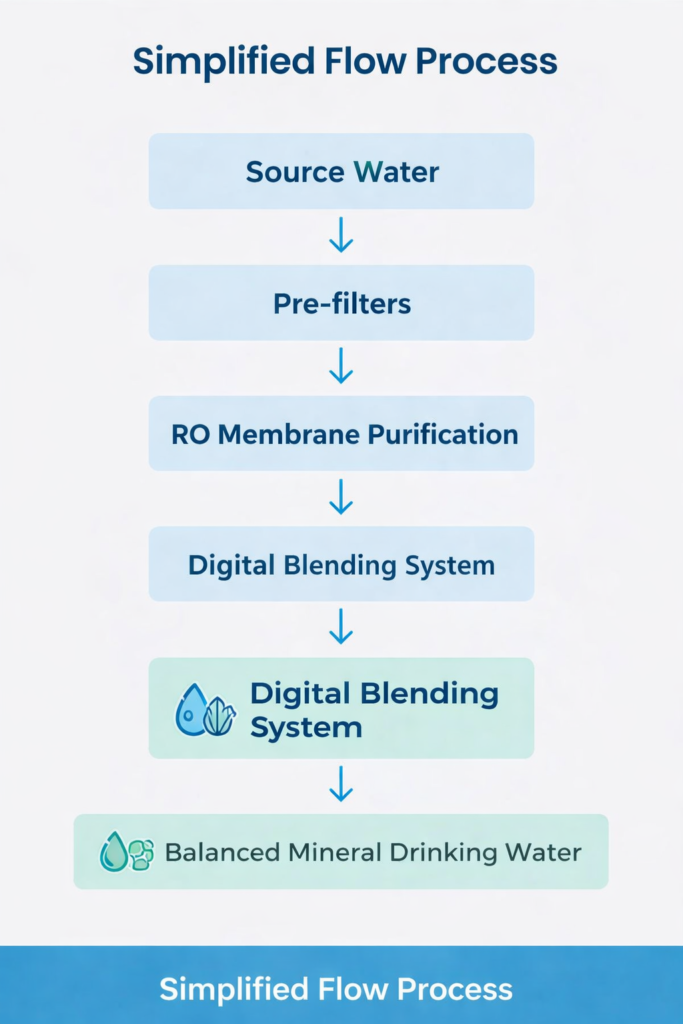
    The Blending Mechanism

    Inside the purifier, water follows two parallel purification paths before reaching your glass.

    1️⃣ RO Purification Path
    In the first path, water passes through the RO membrane, which removes harmful contaminants such as heavy metals, salts, and bacteria. This process produces highly purified water but with very low mineral content.

    2️⃣ Mineral Bypass Path
    In the second path, a small portion of water bypasses the RO membrane while still passing through pre-filtration. This stream retains natural minerals that are important for taste and health.

    The Digital TDS Controller then blends these two streams in the correct proportion to achieve the desired TDS level. By controlling this blending process, the purifier ensures that the output water is both safe and mineral-balanced.

    This intelligent blending ensures the final water stays within the ideal drinking range of around 50–150 ppm, delivering both purity and better taste.

    What Makes Homvel’s Version “Digital”?

    Most standard RO purifiers in the market use a manual TDS controller, which is usually a small screw valve adjusted by a technician during installation. Once set, it rarely adapts to changes in input water quality.

    The problem is that water TDS levels can vary throughout the year, especially in Indian cities where municipal supply and groundwater sources fluctuate.

    Homvel solves this limitation with a fully digital TDS control system that automatically manages mineral balance using smart sensors and electronic control.

    Instead of manual adjustments, the purifier continuously monitors water quality and automatically maintains the target TDS level.

    Comparison: Manual vs Digital TDS Controller

    FeatureManual ControllerHomvel Digital Controller
    Real-time TDS display❌✅
    Auto-adjustment❌✅
    Programmable TDS❌✅
    Service alerts❌✅
    Password protection❌✅

    Because of this automation, the Homvel Digital TDS Controller delivers more consistent water quality, reduces dependency on manual calibration, and provides smarter monitoring for users.

    In simple terms, it transforms a traditional RO purifier into a smart water purification system designed for modern households.

    Key Features of Homvel RO Water Purifier

    Digital TDS Controller

    Maintains ideal mineral balance by automatically adjusting water TDS levels.

    24×7 UV Tank Protection

    Continuous UV sterilization keeps stored water safe from bacteria and microbes.

    Smart TDS Auto-Adjustment

    Automatically balances purified and mineral water for perfect drinking quality.

    6–7 Stage Filtration

    Multi-layer purification removes heavy metals, chemicals, bacteria, and viruses.

    Filter Life Indicator

    Smart alerts notify you when filters need replacement for optimal performance.

    RO Membrane Auto-Flush

    Automatically cleans the membrane to extend life and maintain purification efficiency.

    High Water Recovery System

    Advanced design reduces water wastage compared to traditional RO purifiers.

    Mineral Balanced Output

    Ensures healthy drinking water with ideal TDS levels between 50–150 ppm.

    Smart Service Alerts

    Digital monitoring system provides timely service reminders.

    Compact Modern Design

    Stylish wall-mounted purifier designed to fit modern kitchens.

    Why 24×7 UV Tank Protection Is Important

    Many RO water purifiers successfully remove impurities during filtration but fail to protect the water once it is stored inside the purifier tank. In such cases, bacteria and microbes can slowly grow inside the storage tank, especially when the water remains unused for several hours.

    This is where 24×7 UV Tank Protection becomes extremely important. A built-in UV lamp continuously disinfects stored water to maintain its purity even after the purification process is complete.

    How UV Protection Keeps Water Safe

    • ✔ Prevents microbial growth inside the storage tank
    • ✔ Protects purified water from secondary contamination
    • ✔ Eliminates odor-causing bacteria
    • ✔ Keeps stored water hygienic for longer periods

    In warm and humid climates like India, bacterial growth can occur faster in stored water. Continuous UV protection ensures that the water inside the purifier remains safe, fresh, and hygienic every time you use it.

    Homvel RO vs Standard RO Purifiers in India

    Most traditional RO purifiers focus only on filtration. Homvel RO goes a step further by combining advanced purification with smart monitoring and mineral balance technology. The comparison below shows how Homvel stands apart from typical RO purifiers available in the market.

    FeatureStandard RO PurifierHomvel RO Water Purifier
    TDS ControlManual adjustmentDigital TDS Controller
    Mineral BalanceLimited controlPrecise mineral balancing
    UV Tank ProtectionAvailable in some models24×7 UV tank protection
    Smart Alerts❌ Not available✅ Filter & service alerts
    Real-Time Monitoring❌ Not available✅ Live TDS display

    Who Should Buy Homvel RO?

    Homvel RO is ideal for:

    • Families in North India (UP, Punjab, Haryana, Rajasthan) with high-TDS groundwater
    • Urban households with municipal supply where TDS varies seasonally
    • Health-conscious consumers who understand the importance of mineral balance in water
    • People with children or elderly members at home who need reliably safe water
    • Anyone who has previously owned a standard RO and noticed flat-tasting, demineralized water

    What the WHO and BIS Say About Drinking Water TDS

    Understanding the recommended TDS (Total Dissolved Solids) levels in drinking water is important for maintaining both safety and mineral balance. Two major authorities that provide guidance on drinking water quality are the World Health Organization (WHO) and the Bureau of Indian Standards (BIS).

    WHO Guidelines on Drinking Water Minerals

    According to the World Health Organization (WHO), extremely low-mineral water — often produced by aggressive purification systems such as reverse osmosis — may not always be ideal for long-term consumption.

    Water naturally contains beneficial minerals like:

    • Calcium
    • Magnesium
    • Potassium
    • Bicarbonates

    When these minerals are completely removed, the water may taste flat or slightly acidic and may not provide the same mineral balance found in natural drinking water sources.

    For this reason, many modern purification systems now focus on mineral retention or controlled remineralization rather than removing everything from the water.

    BIS IS 10500 Drinking Water Standards

    In India, drinking water standards are defined under BIS IS 10500.

    For TDS levels, BIS suggests:

    TDS Level (ppm)Water Quality
    Up to 500 ppmAcceptable drinking water
    500–2000 ppmPermissible in absence of alternate source
    Above 2000 ppmNot recommended for drinking

    However, many water quality experts suggest that balanced drinking water typically tastes best and remains healthiest between 50–150 ppm, where beneficial minerals are present but harmful contaminants remain filtered out.

    How Homvel Maintains the Ideal TDS Range

    The Homvel RO Water Purifier with Digital TDS Controller is designed to maintain this mineral balance automatically.

    Instead of producing completely demineralized water, the system uses intelligent blending technology:

    1. Water first passes through the RO membrane to remove contaminants.
    2. A controlled mineral stream is then blended back into the purified water.
    3. The digital TDS controller adjusts the ratio automatically to maintain the desired output level.

    This ensures the final drinking water typically stays within the 50–150 ppm mineral-balanced range, providing both purity and natural taste.

    In simple terms, Homvel doesn’t just purify water — it optimizes it for healthier daily consumption.

    How to Set the Right TDS on Your Homvel RO

    Setting the correct TDS (Total Dissolved Solids) level ensures that your drinking water is both safe and mineral-balanced. The digital TDS controller in Homvel RO allows you to precisely adjust the mineral content in purified water based on your source water quality.

    Follow these simple steps to configure the ideal TDS level.

    Step-by-Step Guide

    1. Check the Input Water TDS
    Before adjusting the purifier, measure the TDS level of your incoming water supply. Many Homvel models show the input TDS on the display panel, or you can use a handheld TDS meter.

    2. Access the Digital Settings Panel
    Open the control interface on the Homvel RO unit. Navigate to the TDS control or mineral balance settings from the digital display panel.

    3. Set Your Desired Output TDS
    Choose the target TDS level you want for drinking water. The recommended range for healthy mineral balance is typically between 75–150 ppm.

    4. Automatic Blending Adjustment
    Once the target TDS is set, the system automatically adjusts the blending ratio between RO-purified water and mineral-rich bypass water. This ensures consistent mineral balance without manual tuning.

    5. Monitor Through the Live Display
    The real-time digital display shows the current output TDS level, allowing you to monitor water quality anytime and make adjustments if needed.

    Recommended TDS Range

    For most households, the ideal drinking water TDS level is:

    75–150 ppm

    This range maintains a good balance between purity and essential minerals, providing water that is both healthy and pleasant in taste.

    Maintenance Tips for Your Homvel RO

    Keeping your Homvel RO Water Purifier well maintained ensures consistent water quality, better filtration efficiency, and a longer lifespan for internal components. Regular maintenance also helps maintain the ideal mineral balance and TDS levels in your drinking water.

    Below are some simple maintenance practices every Homvel user should follow.

    ✔ Maintenance Checklist for Your Homvel RO Purifier

    Regular maintenance keeps your Homvel RO purifier performing at its best. Follow this simple checklist to ensure clean, safe, and mineral-balanced drinking water.

    Change Pre-Filters Every 3–6 Months

    Pre-filters remove dust, sand, and sediment before water reaches the RO membrane. Replacing them every 3–6 months prevents clogging and maintains strong filtration performance.

    Replace RO Membrane Every 2–3 Years

    The RO membrane is the core purification component that removes dissolved salts, heavy metals, and contaminants. Over time, its efficiency decreases, so replacing it every 2–3 years ensures optimal purification.

    Annual UV Lamp Replacement

    Homvel purifiers equipped with UV protection require periodic UV lamp replacement to maintain effective bacterial and microbial protection. An annual replacement is typically recommended.

    Use Built-In Digital Service Alerts

    Homvel’s smart system includes digital service notifications that alert users when filters or components need replacement. Always follow these alerts to maintain peak purifier performance.

    Run Monthly Auto-Flush Cycle

    Running the auto-flush function once a month helps clean the RO membrane and prevents mineral buildup. This improves membrane life and keeps water flow consistent.

    Recalibrate After Monsoon Season

    Water quality often changes during the monsoon due to increased contaminants and fluctuating TDS levels. Recalibrating the TDS settings after the monsoon helps maintain the ideal mineral balance.

    By following these simple maintenance steps, your Homvel RO purifier will continue delivering safe, pure, and mineral-balanced drinking water for years to come.

    Where to Buy Homvel RO Water Purifier

    Explore the latest Homvel RO models and compare features to choose the perfect water purifier for your home. Visit our product pages below to learn more and make an informed decision.

    Don’t Just Purify. Purify Smartly.

    Water purification should not just remove harmful impurities. It should also preserve the natural minerals that are essential for healthy drinking water.

    With its Digital TDS Controller, Homvel RO ensures that every glass of water maintains the perfect balance between purity and essential minerals.

    Instead of over-purifying water like many traditional RO systems, Homvel intelligently adjusts the mineral level to deliver water that is both safe and naturally balanced.

    FAQ’s

    1. What is TDS in drinking water?
    TDS (Total Dissolved Solids) refers to the amount of dissolved minerals, salts, and metals in water. It is measured in parts per million (ppm) and indicates overall water quality.
    2. What is the ideal TDS level for drinking water?
    According to WHO and BIS guidelines, the ideal TDS range for drinking water is typically between 50 and 150 ppm for balanced taste and mineral content.
    3. Does an RO purifier remove minerals from water?
    Yes, traditional RO purifiers remove both harmful contaminants and beneficial minerals such as calcium and magnesium, which is why TDS control is important.
    4. What is a digital TDS controller in an RO purifier?
    A digital TDS controller automatically adjusts the mixing of purified and mineral water to maintain the desired TDS level, ensuring balanced drinking water.
    5. Why is TDS control important in RO water purifiers?
    TDS control ensures that purified water retains essential minerals while removing harmful contaminants, improving both taste and health benefits.
    6. How often should RO filters be replaced?
    Pre-filters typically need replacement every 3–6 months, while RO membranes usually last 2–3 years depending on water quality and usage.
    7. What is UV protection in a water purifier?
    UV purification uses ultraviolet light to eliminate bacteria and viruses in water, ensuring microbiologically safe drinking water.
    8. Is RO purifier necessary for high TDS water?
    Yes, RO purification is recommended when water TDS exceeds 300 ppm, as it effectively removes excess salts and harmful contaminants.
    9. What are the benefits of mineral-balanced RO water?
    Mineral-balanced RO water retains beneficial minerals like calcium and magnesium, which improve taste and support overall health.
    10. How do I maintain my RO water purifier?
    Regular maintenance includes replacing filters on time, cleaning the storage tank, and scheduling annual servicing to ensure optimal performance.
  • Complete RO Water Purifier Buying Guide for High TDS Areas

    Across many parts of North India, tap and groundwater often contain Total Dissolved Solids (TDS) ranging from 220 to over 1,000 mg/L – levels that can exceed what is considered ideal for safe daily drinking.

    Rapid urbanization, groundwater depletion, agricultural runoff, and ageing water infrastructure have made water quality a growing concern for households in both cities and semi-urban areas.

    High-TDS water may appear clean, but it frequently carries excess minerals, dissolved salts, heavy metals, and chemical impurities. Regular consumption of such water can lead to digestive issues, kidney strain, joint discomfort, dry skin, and an unpleasant taste, making it harder for families to maintain proper hydration – especially during hot North Indian summers.

    This is why many households now actively search for a reliable water purifier buying guide, solutions for high TDS water, and clear answers on whether RO water purifiers are necessary.

    Choosing the right purifier is not just about brand or price – it depends on local water conditions, TDS level, source water quality, and daily usage needs.

    By the end of this guide, you’ll be able to choose a safe, efficient, and cost-effective water purifier suited for high-TDS water commonly found across North India.

    Also read: Hard Water Problems in India & Why Homvel RO Is the Best Solution for High-TDS Areas

    What is TDS and Why Does North India Have a High TDS Problem?

    TDS (Total Dissolved Solids) refers to the total amount of dissolved substances present in water. These include calcium, magnesium, sodium, potassium, chlorides, sulfates, bicarbonates, and in some cases, heavy metals like lead or arsenic.

    TDS is measured in milligrams per liter (mg/L) and is one of the most important indicators of drinking water quality. While some dissolved minerals are naturally occurring and even beneficial in small amounts, excessively high TDS alters water taste, affects digestion, and places long-term stress on the body.

    According to commonly accepted guidelines, drinking water with TDS below 300 mg/L is ideal, while levels above 500 mg/L may require advanced purification – especially if the source is groundwater.

    North India’s Water Quality Challenge

    Large parts of North India rely heavily on groundwater, which passes through mineral-rich soil layers before reaching borewells and hand pumps. This process significantly increases TDS levels. Factors such as:

    • Over-extraction of groundwater
    • Agricultural runoff
    • Industrial discharge
    • Declining water tables

    have further worsened water quality across many regions.

    As a result, households in North India frequently encounter TDS levels ranging from 400 to 1,000+ mg/L, making basic filtration systems insufficient. This is why searches related to “high TDS water solutions” and “RO water purifier buying guide” are increasingly common in these areas.

    ⚠️ Health Risks of High TDS Water

    Consuming high-TDS drinking water over long periods can negatively affect health, especially when harmful contaminants are present. Common risks include:

    • Digestive issues such as bloating and stomach discomfort
    • Kidney stress caused by excess mineral load
    • Joint pain linked to high calcium and magnesium levels
    • Dry skin and hair problems due to mineral imbalance
    • Poor taste and odor, which reduces daily water intake

    Children, elderly individuals, and people with kidney-related conditions are particularly vulnerable to the effects of high-TDS water.

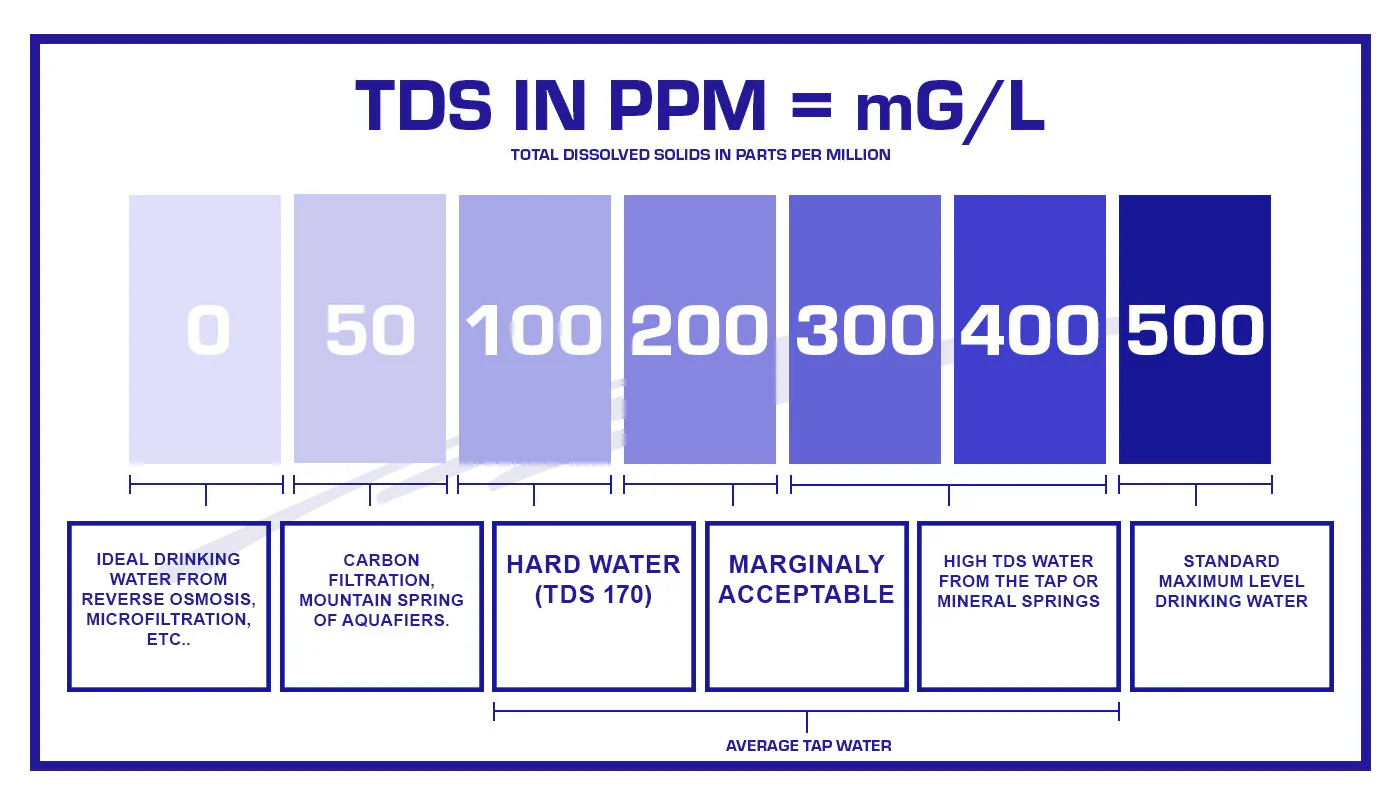
    TDS Scale Chart

    TDS Level (mg/L) Water Quality Health & Usage Recommendation
    0 – 50Distilled / Demineralized Lacks essential minerals; not ideal for long-term drinking
    50 – 150Excellent Ideal for daily drinking; balanced mineral content
    150 – 300Good Safe for consumption; mild mineral taste may be present
    300 – 500Acceptable Usable with basic filtration; taste may be noticeable
    500 – 1,000Poor Not recommended without RO purification
    1,000+Unsafe Advanced RO system essential for safe drinking

    How to Test Your Drinking Water Quality

    Before choosing any water purifier, the most important step is testing your water. Many homes across North India install purifiers based on assumptions, which often leads to wrong technology, unnecessary expenses, or unsafe drinking water. Testing helps you choose the right solution—not the most expensive one.

    TDS Level (mg/L)What It MeansRecommended Action
    Below 150Very low mineral contentConsider mineral enhancement or remineralization
    150 – 300Ideal for drinkingNo purification required; basic filtration is sufficient
    300 – 500Moderately high TDSPurification recommended for better taste and safety
    500 – 1,000High TDS waterRO water purifier strongly advised
    Above 1,000Unsafe for direct consumptionAdvanced RO treatment is essential

    ⚠️ Important: TDS meters measure the quantity of dissolved solids, not their quality. Harmful contaminants such as heavy metals, pesticides, or bacteria can still be present even at moderate TDS levels.

    Step-by-Step DIY Water Testing Using a TDS Meter

    1. Step 1: Collect a Water Sample

      Take a clean glass and fill it with tap or borewell water. Avoid using RO or filtered water for testing, as it will not reflect your actual source water quality.

    2. Step 2: Turn On the TDS Meter

      Switch on the digital TDS meter using the power button. Ensure the device is dry and clean before placing it in the water.

    3. Step 3: Immerse the Probe

      Dip the metal probe into the water up to the marked level. Do not submerge the entire meter, as this may damage the device.

    4. Step 4: Wait for the Reading to Stabilize

      Hold the meter steady for 5–10 seconds until the display stabilizes. The reading will appear in mg/L or ppm.

    5. Step 5: Record the Result

      Repeat the test 2–3 times for accuracy and note the average TDS value. This helps you choose the correct water purification technology.

    Also read: Why Real-Time TDS Monitoring Matters: A Feature Every RO Should Have

    How to Understand Your TDS Results

    TDS Level (mg/L)What It MeansRecommended Action
    Below 150Very low mineral contentConsider mineral enhancement or remineralization
    150 – 300Ideal for drinkingNo purification required; basic filtration is sufficient
    300 – 500Moderately high TDSPurification recommended for better taste and safety
    500 – 1,000High TDS waterRO water purifier strongly advised
    Above 1,000Unsafe for direct consumptionAdvanced RO treatment is essential

    Important: TDS meters measure the quantity of dissolved solids, not their quality. Harmful contaminants such as heavy metals, pesticides, or bacteria can still be present even at moderate TDS levels.

    When to Choose Professional Water Testing

    ⚠️ When to Choose Professional Water Testing

    Professional water testing is strongly recommended if:

    • Your water smells unusual, tastes metallic, or causes frequent stomach issues
    • You rely on borewell or tanker water for daily consumption
    • There is a known history of industrial or agricultural contamination in nearby areas
    • You need detailed analysis of heavy metals, bacteria, fluoride, iron, or nitrates

    Certified testing laboratories provide comprehensive water reports that help you accurately select the right RO capacity, filtration stages, and mineral balance for safe long-term drinking water.

    Water Purifier Technology Comparison – Which One Actually Works for High TDS Water?

    Choosing the right water purifier technology is more important than choosing a brand. Many households end up buying the wrong purifier simply because they don’t understand what RO, UV, and UF actually do – and more importantly, what they cannot do.

    This section breaks down each technology clearly, so you can match it to high-TDS water conditions commonly found across North India.

    1. RO (Reverse Osmosis) – Best Solution for High TDS Water

    Reverse Osmosis (RO) is the most effective purification technology for areas with high TDS levels (above 300 mg/L). It works by forcing water through a semi-permeable membrane that removes up to 95–99% of dissolved impurities.

    What RO removes:

    • Excess TDS
    • Heavy metals (lead, arsenic, mercury)
    • Fluoride and nitrates
    • Dissolved salts and chemicals
    • Bad taste and odor

    Why RO is essential in North India:

    Groundwater in many North Indian regions naturally contains high mineral content, industrial residues, and agricultural contaminants. Only RO can physically remove dissolved solids, which UV and UF technologies cannot.

    Limitations of RO:

    • Wastes some water during purification
    • Removes both harmful and beneficial minerals (which is why mineral cartridges are important)

    Verdict: If your water TDS is high, RO is non-negotiable.

    2. UV (Ultraviolet) – Effective Only Against Microbes

    UV purification uses ultraviolet light to kill bacteria, viruses, and microorganisms present in water. It does not remove any physical or chemical impurities.

    What UV does well:

    • Destroys harmful microbes
    • Prevents waterborne diseases
    • Maintains natural taste of water

    What UV cannot do:

    • Does NOT reduce TDS
    • Does NOT remove heavy metals, fluoride, or chemicals
    • Does NOT remove sediment or turbidity

    When UV works best:

    UV is suitable only when the water source is municipal or already low in TDS but may have microbial contamination due to storage or pipeline issues.

    Verdict: UV alone is not suitable for high TDS groundwater.

    3. UF (Ultrafiltration) – Only for Visible Impurities

    UF technology works through a hollow fiber membrane that filters out suspended particles and sediments.

    What UF removes:

    • Dirt and sand
    • Rust and silt
    • Some bacteria (limited)

    What UF cannot do:

    • Does NOT remove dissolved salts
    • Does NOT reduce TDS
    • Does NOT remove chemicals or heavy metals

    Common misconception:

    Many people believe UF is a “non-electric RO alternative,” but this is misleading. UF cannot handle dissolved impurities, which are the main problem in high-TDS water.

    Verdict: UF alone is suitable only for low-TDS surface water, not groundwater.

    4. RO + UV + UF Combination – Best Overall Protection for North India

    For most households dealing with high TDS, microbial risks, and sediment, the RO + UV + UF combination offers the most comprehensive protection.

    Why this combination works best:

    • RO removes dissolved solids, heavy metals, and chemicals
    • UV disinfects water by killing bacteria and viruses
    • UF filters out fine particles and improves clarity

    This multi-stage purification ensures that all major categories of contaminants—physical, chemical, and biological—are addressed.

    Verdict: For high-TDS water common across North India, RO + UV + UF is the safest and most future-proof choice.

    Water Purifier Technology Comparison

    TechnologyRemoves High TDSRemoves MicrobesRemoves SedimentSuitable for High-TDS Water
    RO✅ Yes❌ No (alone)❌ No✅ Yes
    UV❌ No✅ Yes❌ No❌ No
    UF❌ No⚠️ Limited✅ Yes❌ No
    RO + UV + UF✅ Yes✅ Yes✅ Yes✅ Best Option
    Key Takeaway:
    If your water source has high TDS, choosing anything other than RO-based purification is a compromise on safety. For long-term health, better taste, and complete purification, RO + UV + UF systems deliver the most reliable results.

    Digital TDS Controller – Why It Matters More Than You Think

    A Digital TDS Controller is one of the most overlooked yet most critical components in a modern RO water purifier – especially in regions with fluctuating or high TDS water, common across much of North India.

    At its core, a TDS controller regulates how much mineral content is retained or removed after RO purification.

    While RO membranes are excellent at removing harmful contaminants, they also strip away essential minerals. A TDS controller ensures that the final drinking water is safe, balanced, and palatable, rather than over-purified.

    Manual vs Digital TDS Controller: What’s the Difference?

    Feature Manual TDS Controller Digital TDS Controller
    Adjustment Method Requires physical adjustment using a knob or screw Automatically adjusts mineral retention digitally
    Response to TDS Fluctuations Settings remain fixed even if input water TDS changes Adjusts dynamically based on input water quality
    Accuracy & Control Accuracy depends on technician setup

    The Intellplus Digital Advantage

    Unlike conventional systems, Intellplus digital RO purifiers use an intelligent digital TDS controller that continuously analyzes incoming and purified water.

    Key advantages include:

    • Automatic mineral balancing without manual intervention
    • Optimized TDS levels that meet drinking water standards
    • Better taste consistency across seasons
    • Reduced dependency on technician visits

    This digital approach ensures that water quality remains stable, safe, and customized, regardless of fluctuations in source water TDS.

    Real-Time Monitoring: A Practical Daily Benefit

    One of the biggest benefits of a digital TDS controller is real-time monitoring. Instead of guessing whether your purifier is working correctly, the system actively manages output quality every time you draw water.

    Real-world benefits:

    • No over-demineralized water
    • Consistent taste and mineral content
    • Longer RO membrane life due to optimized operation
    • Higher confidence in daily drinking water safety

    In a high-TDS environment, a digital TDS controller isn’t a luxury – it’s a necessity. It bridges the gap between advanced purification and healthy mineral retention, making it a key decision factor when choosing a water purifier.

    Key Features to Look for in a Water Purifier

    Choosing the right water purifier isn’t just about RO or UV technology. For households across North India, water quality challenges like high TDS, frequent power cuts, and mineral imbalance make certain features far more important than others.

    Below are the key features you should prioritize before making a purchase.

    🔋 Storage Tank Capacity (8–10 Litres Is Ideal)

    Many parts of North India face frequent power cuts, especially during summers and monsoons. Since RO water purifiers require electricity, a larger storage tank becomes essential.

    • Ensures clean drinking water during power outages
    • Suitable for families of 4–6 members
    • Reduces frequent purifier refill cycles

    👉 Smaller tanks may save money initially, but often fail when you need water the most.

    💧 Water Recovery Rate (60% = Better Water Savings)

    Traditional RO systems waste a large amount of water. In high-TDS regions, choosing a purifier with an optimized water recovery rate is crucial.

    A 60% or higher recovery rate means:

    • Less water wastage per litre purified
    • Lower monthly water bills
    • Environment-friendly purification

    🔍 Want accurate readings? Read our guide on Digital TDS Controller vs Manual Adjustment .

    🧪 Multi-Mineral Fortification (Copper + Zinc + Alkaline)

    While RO purification removes harmful contaminants, it also strips essential natural minerals from water.

    Advanced purifiers restore health-supporting minerals such as:

    • Copper – supports immunity and gut health
    • Zinc – vital for metabolism and immune function
    • Alkaline minerals – help balance pH and improve taste

    📖 Learn more in our detailed guide: Copper + Zinc + Alkaline Water Benefits .

    🛡️ 24-Hour UV Tank Protection (Often Ignored, Extremely Important)

    Even after purification, stored water can develop bacterial growth inside the tank, especially in warm North Indian climates.

    Premium systems like :contentReference[oaicite:0]{index=0} offer 24-hour UV protection inside the storage tank, which:

    • Continuously sterilizes stored water
    • Prevents secondary contamination
    • Keeps water safe even if unused for hours

    🔎 View detailed specs here: Intellplus Product Specifications Page .

    🛠️ Warranty & Service Support (Long-Term Peace of Mind)

    A water purifier is a long-term investment. Before buying, always check:

    • Minimum 1-year comprehensive warranty
    • Availability of local service support
    • Cost and replacement cycle of filters and membranes

    ⚠️ Even the best purifier becomes a problem if service support is poor.

    Budget & Cost Breakdown

    When you buy a water purifier for high-TDS North Indian water, think beyond the sticker price. Total ownership cost = initial purchase + annual maintenance (AMCs / consumables) + occasional part replacements (membrane / UV lamp). Below is a realistic budget roadmap and a 5-year cost comparison across Intellplus, Kent, Aquaguard and AO Smith.

    Initial purchase – price tiers (typical India market ranges)

    • Budget (basic UV/UF / entry RO): ₹7,000–₹12,000.
    • Mid-range (popular RO + mineraliser / TDS controller): ₹13,000–₹25,000.
    • Premium / Under-counter & smart RO: ₹24,000–₹35,000+.
      These bands align with current listings from leading retailers and manufacturer catalogs (examples: Aquaguard / Flipkart, AO Smith product pages, Kent).

    Note: I couldn’t find a consistent public MSRP for Intellplus across major retail sites during searches; if you have a specific Intellplus model, include that SKU for a precise comparison (or we can use your Intellplus Product Specifications Page link).

    Annual maintenance (typical)

    • AMC / yearly servicing: ₹1,200–₹2,500 / year for many brands; many owners opt for ₹1,800–₹2,000/year AMC for mid-range units.
    • Ad-hoc part replacements (every 2–4 years): pre/post carbon or sediment filters ₹600–1,200; RO membrane ₹1,000–2,500; UV lamp ₹600–1,000. Sources report common AMC and per-service charges in these ranges.

    5-Year Total Cost of Ownership – Worked Example

    To understand the true cost of a water purifier, it’s important to look beyond the upfront price. Below is a realistic 5-year cost comparison based on typical purchase prices, annual maintenance contracts (AMC), and one RO membrane replacement.

    Assumptions (Representative Models)

    • Intellplus: Purchase ₹18,000, AMC ₹2,000/year
    • Kent: Purchase ₹15,000, AMC ₹2,000/year
    • Aquaguard: Purchase ₹16,000, AMC ₹2,000/year
    • AO Smith: Purchase ₹24,000, AMC ₹2,500/year

    Additional assumption: One RO membrane replacement during 5 years (approximately ₹1,800 for all brands).

    5-Year Cost Calculation

    BrandCost Breakdown5-Year Total
    Intellplus₹18,000 + (₹2,000 × 5) + ₹1,800₹29,800
    Kent₹15,000 + (₹2,000 × 5) + ₹1,800₹26,800
    Aquaguard₹16,000 + (₹2,000 × 5) + ₹1,800₹27,800
    AO Smith₹24,000 + (₹2,500 × 5) + ₹1,800₹38,300

    These figures show why upfront price alone can be misleading. Even a lower-cost purifier can end up with a similar or higher total ownership cost once AMC charges and replacement parts are included.

    Note: Costs are indicative. AMC pricing and service charges may vary by model and region.

    Why Intellplus Is Built for North India’s Water Challenges

    Choosing a water purifier for North India isn’t just about RO filtration – it’s about precision control, mineral balance, and continuous protection.

    This is where Intellplus water purifiers stand apart from conventional models by addressing the real problems of high-TDS groundwater rather than offering one-size-fits-all purification.

    1. Digital TDS Controller: Smarter Water, Not Just Filtered Water

    Most standard RO purifiers remove 90–95% of dissolved solids, regardless of whether your input TDS is 300 or 1,000 mg/L. This often results in over-purified, flat-tasting water.

    Intellplus solves this with a Digital TDS Controller, which:

    • Continuously monitors input and output TDS levels
    • Retains essential minerals based on actual water quality
    • Prevents excessive mineral stripping common in generic RO systems

    This makes it especially effective for North Indian regions where groundwater TDS fluctuates seasonally. You get consistent, balanced drinking water instead of blindly purified RO water.

    2. Multi-Mineral Fortification: Rebuilding What RO Removes

    RO purification is necessary for high TDS – but it also removes beneficial minerals like calcium, magnesium, copper, and zinc.

    Intellplus integrates multi-mineral fortification, ensuring:

    • Better taste and improved hydration
    • Support for bone health, digestion, and immunity
    • Long-term safety for children and elderly users

    Unlike basic “mineral cartridges,” Intellplus focuses on controlled mineral dosing, preventing both deficiency and excess – an important factor for households consuming RO water daily.

    3. 24-Hour UV Protection: Safety Even After Purification

    A common weakness in many purifiers is post-storage contamination. Once water is stored in the tank, bacterial growth can occur – especially in warm climates.

    Intellplus addresses this with 24-hour UV protection, which:

    • Continuously disinfects stored water
    • Prevents bacterial regrowth inside the tank
    • Ensures safety even if water isn’t consumed immediately

    This feature is particularly valuable in North India’s hot climate, where stagnant water can quickly become unsafe.

    4. Designed for Real North Indian Water Conditions

    Intellplus purifiers are engineered for:

    • High-TDS borewell and mixed-source water
    • Voltage fluctuations common in residential areas
    • Long operating hours without performance drops

    Rather than lab-only specifications, the system is built for daily household stress conditions found across North India.

    Value Comparison: Intellplus vs Conventional RO Water Purifiers

    FeatureIntellplus Water PurifierConventional RO Purifier
    Digital TDS Control✅ Yes❌ No
    Multi-Mineral Fortification✅ Advanced & Balanced⚠️ Basic / Optional
    24-Hour UV Protection✅ Yes❌ Limited / None
    High-TDS Water Adaptability✅ Optimized⚠️ Generic
    Long-Term Water Taste✅ Consistent❌ Often Flat
    Designed for North Indian Water✅ Yes❌ No

    Insight: Intellplus focuses on controlled purification, mineral balance, and continuous protection—making it better suited for high-TDS water condit

    Water Purifier Buying Checklist

    1. Test Water TDS

    Have you tested input water TDS?

    Below 300 mg/L → RO may not be required
    Above 300 mg/L → RO is essential

    Buying without testing often leads to over- or under-purification.

    2. Purification Technology

    Match purifier to water source (borewell, tanker, mixed).

    High TDS water requires:
    • RO (mandatory)
    • UV (microbial safety)

    UF alone is not sufficient.

    3. TDS Control / Minerals

    Does it retain essential minerals?

    Fixed RO systems may strip all minerals, causing:
    • Flat taste
    • Long-term mineral deficiency

    4. Storage Capacity

    Choose tank size by family:

    1–2 members → 6–8 L
    3–5 members → 8–10 L
    Large families → 10+ L

    Important during power cuts.

    5. Post-Storage Safety

    Does it protect stored water?

    Features like 24-hour UV protection prevent bacterial regrowth.

    Critical in warm climates.

    6. Service & Spares

    Check availability of:

    • Filters
    • RO membrane
    • UV lamp

    Poor service increases downtime and cost.

    7. Warranty & Cost

    Verify:

    • Warranty period
    • AMC & filter replacement cost

    Always calculate 5-year ownership cost, not just price.

    Top 10 Digital TDS Display RO Water Purifiers 

    #Model NameKey FeaturesDigital TDS / Smart DisplayBest For
    1 Homvel Intell Plus – Smart Digital TDS RO
    (Copper + Zinc + Alkaline)
    • Digital TDS controller with live front-panel display
    • RO + UV + UF + Copper + Zinc + Alkaline multi-mineral system
    • 24-hour UV tank protection to prevent bacterial regrowth
    • Engineered for high-TDS borewell & mixed water common in UP
    Live Digital TDS Display
    Controlled mineral retention
    Only model with multi-mineral + 24×7 UV
    High-TDS households in Uttar Pradesh seeking long-term health-safe RO water
    2 Ionix Wave Digi RO (TDS Display Series) • Multi-stage RO purification
    • Copper enrichment cartridge
    • Compact, modern design
    Digital TDS & filter-status display Small families, modular kitchens
    3 Smart RO/UF 6-Stage Digital Display Purifier • RO + UF purification
    • Smart auto-flush membrane cleaning
    • Service reminders built-in
    LED screen with real-time TDS Users wanting automation & alerts
    4 Aqua Digi RO – High TDS Smart Display • RO + UV + UF + TDS controller
    • Handles input TDS up to 2000–2500 ppm
    • 10L storage tank
    Digital purity & TDS indicator Large families using borewell water
    5 Well Smart Digital RO (Alkaline + TDS Display) • 9-stage RO/UF/UV purification
    • Alkaline mineralization
    HD LED TDS display Premium kitchen setups
    6 IntelliSmart App-Controlled Digital RO • App-based TDS tuning
    • Adaptive flow & RO-UV modes
    • Filter tracking without AMC lock-in
    App-controlled digital TDS Tech-savvy households
    7 Smart LED-Display RO (Stainless Body) • RO purification system
    • Stainless-steel body
    • Multiple membrane capacity options
    LED system-status display Durability-focused buyers
    8 Wi-Fi Enabled TDS Display Smart Purifier • IoT-enabled RO system
    • App notifications for service & filters
    On-device + app TDS display Urban smart homes
    9 Digital Purity & Mineral Display Under-Sink RO • Under-sink concealed RO
    • RO + UV + UF + TDS control
    Faucet-mounted purity display Clean countertop lovers
    10 Smart Display RO Purifier (8L Category) • RO + UV purification
    • 8L storage tank
    Front smart status display Nuclear families

    Conclusion

    Across much of North India, high-TDS groundwater has quietly become a daily health risk. Water that looks clear can still contain excess salts, dissolved metals, and chemical impurities that affect digestion, kidneys, skin health, and long-term wellbeing.

    As we’ve seen throughout this guide, relying on basic filtration or UV systems alone is often not enough for high-TDS water conditions.

    The solution lies in choosing a water purifier designed specifically for high TDS, with RO purification, accurate TDS control, and essential mineral balancing – not generic, one-size-fits-all models.

    When selected correctly, a good RO system removes harmful contaminants while retaining water quality suitable for daily drinking.

    This is where Intellplus stands out. With high-recovery RO technology, digital TDS control, advanced filtration, and region-specific configurations, Intellplus purifiers are designed specifically for challenging North Indian water conditions – delivering safe, great-tasting water without unnecessary water waste.

    Frequently Asked Questions

    1. What TDS level is considered unsafe for drinking water?
    Water with TDS above 300 mg/L begins to affect taste, while levels exceeding 500 mg/L may cause long-term health issues if consumed regularly. In many North Indian regions, groundwater TDS often crosses these limits, making purification essential.
    2. Is RO water purifier necessary for high TDS water?
    Yes. RO (Reverse Osmosis) is the only household purification technology capable of removing dissolved salts, heavy metals, and excess minerals from high-TDS water. UV and UF purifiers alone are ineffective when TDS levels are high.
    3. Can high TDS water cause health problems?
    Long-term consumption of high-TDS water may contribute to kidney stones, digestive discomfort, joint pain, dehydration, and poor nutrient absorption—especially in children and elderly individuals.
    4. Does RO remove all minerals from water?
    RO removes both harmful and beneficial minerals. That’s why modern systems, such as Intellplus water purifiers, include mineral, copper, zinc, or alkaline cartridges to restore essential nutrients after purification.
    5. Is RO water safe for daily consumption?
    Yes. When paired with proper mineral restoration, RO water is safe, balanced, and often healthier than untreated groundwater or tanker water.
    6. How do I know my home’s water TDS level?
    You can measure it using a digital TDS meter or by getting your water tested locally. Many advanced water purifiers also include digital TDS displays showing real-time inlet and outlet water quality.
    7. Does RO waste a lot of water?
    Older RO systems wasted more water. Newer models use water-saving technology that significantly reduces wastage while maintaining high purification efficiency.
    8. How often does an RO purifier need servicing?
    Most RO systems require filter replacement every 6–12 months, depending on water quality and usage. Choosing a purifier with reliable service support ensures long-term performance.
    9. Is boiled water safer than RO-purified water?
    Boiling kills bacteria but does not remove TDS, heavy metals, or chemical contaminants. For high-TDS groundwater, RO purification is far more effective than boiling.
    10. What makes Intellplus water purifiers suitable for North Indian water?
    Intellplus water purifiers are designed for high-TDS groundwater and feature high-rejection RO membranes, multi-stage filtration, digital TDS control, and mineral enhancement—making them ideal for North Indian water conditions.